- Engineering & Construction
- Environment
- Telecommunications
- Renewable energies
- Ventures
- Real estate
Respect. (from the lat. respectu) n. 1. respect; 2. consideration; high regard; 3. deference; compliance; veneration; 4. honour; worship; 5. relation; refererence...
We believe that everyone should be respected for their work, for their attitudes, opinions and options.
Rigor. (from the lat. rigore) n. 1. harshness; strength; 2.fig., severity; punctuality; accuracy.
There is no "more or less levelled", "more or less upright”, "more or less clean" or "more or less safe", but rather “levelled”, "upright”, "clean” and “safe". The rigour is reflected in our procedures, in time and in the rules to follow. In the light of moral and principles, being severe means being rigorous.
Passion. (from the lat. passione) n. 1. intense and usually violent feeling (affection, joy, hate, etc.) which hinders the exercise of impartial logic; 2. derived from a feeling; 3. great predilection; 4. partiality; 5. great grief; immense suffering...
Under the sign of passion – a text of the Portuguese poet Regina Guimarães – is our icon. Passion is to reveal great enthusiasm for something, favourable encouragement or opposite to something.
It is the sensibility transmitted by an architect or engineer through work.
Passion is the dedication to a project. Passion is a state of warm soul.
Loyalty. (from the lat. legalitate) n. the quality of being loyal; fidelity; sincerity.
Respect for the principles and rules that guide the honour and probity. Faithfulness to commitments and agreements undertaken, staunch character.
To remain loyal to the business partners because we depend on them and they depend on us.
Being trustworthy for being loyal.
Solidarity. (from the lat. solidare) n. 1. the quality of being solidary; 2. reciprocal responsibility among the members of a group, namely social, professional, etc.; 3. sense of sharing another’s suffering.
Being solidary is being a friend, offering our hand with genuine generosity and bringing joy and human warmth to those who, somehow, are marginalized. Being solidary is being more human. A solidary company is recognized as a fair and non-selfish company. A solidary company is a preferred choice in business. It is a more competitive company. Volunteering is a vehicle to solidarity. It is modern, fair, cultured, friend, it is a noble gesture of moral elevation.
Courage. (from the lat. coraticum) n. 1. bravery facing danger; intrepidity; to have audacity; 2. moral force before a suffering or setback; 3. [fig.] to input energy when performing a difficult task; perseverance...
Courage is essential in our life. Courage to face less pleasant situations when complex issues come up, not expecting random resolutions.
It is a value that we must highlight as opposed to the fearful, cowardly and laziness.
The courage to react to criticism not with an attitude of demotivation or sadness, but rather to search for the means and the action to overcome its own reason. This kind of courage, which is also an intellectual courage, is highly recommended.
Ambition. (from the lat. ambitione) n. 1. vehement desire of wealth, honours or glories; 2. expectation about the future; aspiration; 3. lust; greed…
Vehement desire to achieve a particular goal. Ambition not to resign ourselves. Ambition to take the best potential from ourselves. Ambition to deserve ourselves. Ambition to be athletes in our top-level competitive jobs. Ambition to beat our brands. Ambition to get the best deals with the maximum value, due to the high levels of proficiency and efficiency.
Esthetics. ESTHETICS (from the Greek aisthetiké, "sensitive") n.f. 1. Philosophy branch of philosophy that studies the beauty and nature of artistic phenomena; 2. author's own style, time, etc.; 3. harmony of shapes and colors, beauty; 4. set of techniques and treatments that aim to beautify the body.
We decided to build the company's economic foundations under a cultured, cosmopolitan and cool image. Because it is a charming state of being. Good taste because we are sustainable and we respect the planet. Good taste because we are sensitive. Good taste just because.
Responsibility. (from the lat respondere) n. the trait of being answerable to someone for something or being responsible for one's conduct; a form of trustworthiness.
We must be certain that, before a choice, we chose what is best for both of us and not just the best for each one. Each employee is responsible for his negotiated activity and co-responsible if the co-worker does not fulfil his own task, thus preventing the common goal. A team is a set of individuals - is a whole. In the business game, as in social or family contexts, everyone must comply with their own relative position and we shall not permit that one of ours fails to be in our team.
Expresso
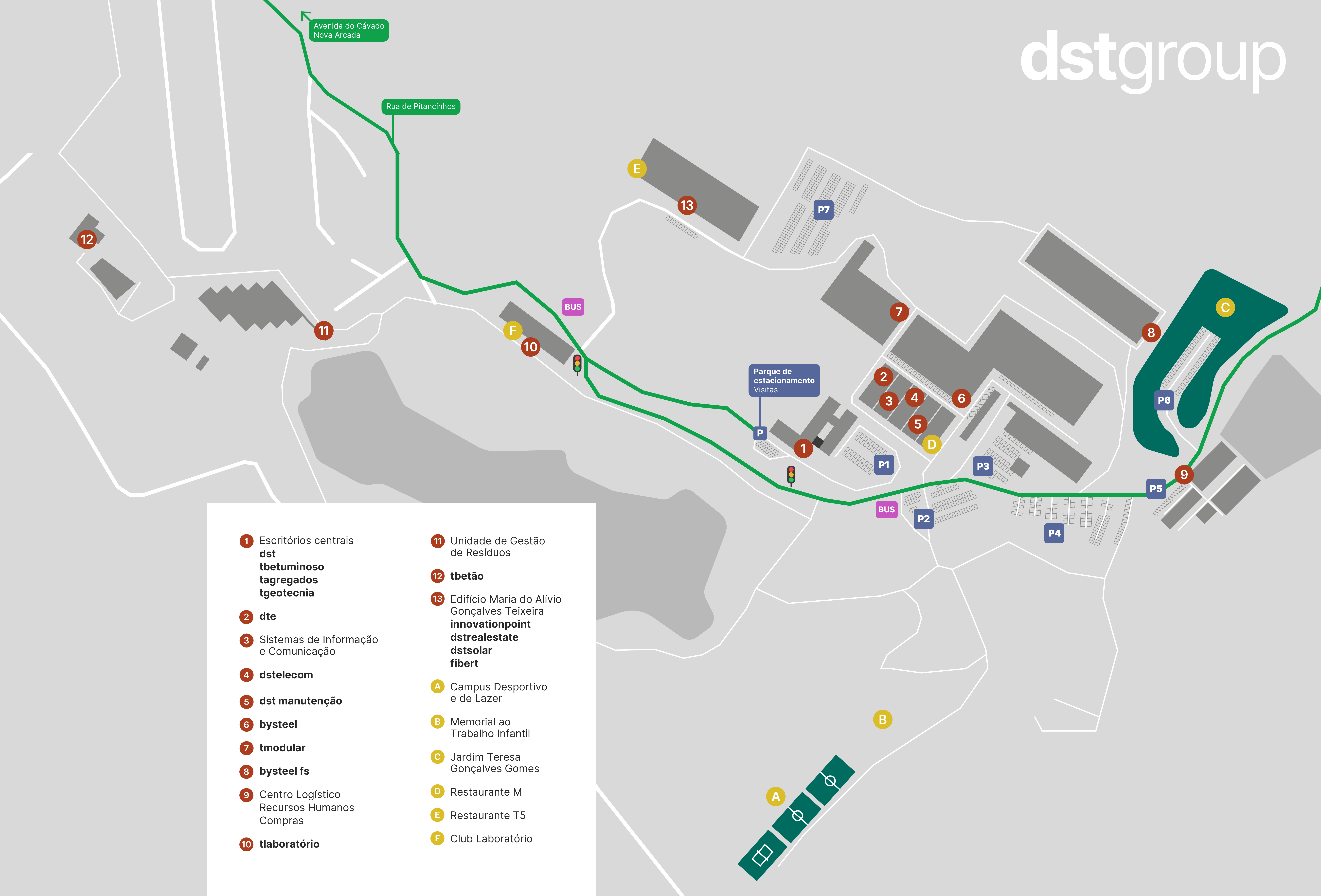
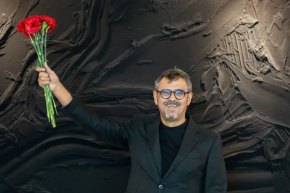
The dst group is currently developing the Living Lab project, which aims to create a “micro city” made up of buildings the components of which are produced in factories and then assembled, and it being designed by the renowned British architect Norman Foster, a Pritzker Prize for architecture winner who joins Portuguese architects Siza Vieira and Souto Moura, also Pritzker Prize winners who have projects at the DST Campus. The head of DST, José Teixeira, has said he wants to open the company’s facilities to the community and build “creative energy”. On 25 April, the Muzeu – the DST Museum of Thought and Contemporary Art will open in the centre of Braga.
With the Living Lab project, would it theoretically be possible to live on dst’s premises?
Well, we will in fact have 87 rooms, a tower, a hotel and smart studios, a nursery (opening in September) and six studios for senior residences. But one of the ideas we have here is to enable a worker to leave their child at the nursery and their father at the care home while working. This is as a response to an evident disconnect within the community. It is clear that I will favour poorer individuals, those on lower salaries. There is a very great need. And I want to allocate some places to the two parishes where we are based; being a good neighbour is also something I care deeply about. Management will be entrusted to the Red Cross, but we will have a pedagogical plan based on experience, on working the land without any problem with getting your hands dirty or getting caught in the rain, in contact with reality.
Your premises occupy a huge area, with factories, offices and other services as well as installations and works of art in a kind of open-air museum, so could you one day charge admission?
Charging no, absolutely not. But there will be an organised visitor programme. We receive visits here every day and, in some way, we need to structure them, with a defined route, while also considering safety issues within the factory. This may sound a little arrogant, but I usually speak of a ‘DST effect’, inspired by the “Bilbao effect”, where the power of culture transformed an entire region. It was a metallurgical and metalworking region, with a polluted estuary and had undergone very visible decline. People were fed up with that ecological situation and then, when in 1983 the Basque Country decided to create a team to recover that heritage and territory, and later partnered with the Guggenheim Foundation, and then chose Frank Gehry and Richard Serra, and invited Siza (Álvaro Siza Vieira) to design the library, invited (Santiago) Calatrava to design the airport and Norman Foster to design the metro stations, there truly was a ‘Bilbao effect’.
We already have three Pritzkers, namely Siza, Souto Moura and Norman Foster. And we may have a fourth Pritzker here. I have the architecture, I have the works of art, I have the interiors of the buildings filled with works of art, and the DST school, which we regard as a theatre inside the walls, where we hold book presentations, and I also have the Industrial school, rescued from former industrial schools, with laboratories and an artistic residency. Our industrial school offers studies from the tenth to the twelfth grade, and the artists we host in residencies have to go there once a month, as do poets, to introduce the literacies of beauty, humanities and philosophy into its technical subjects. With this combination, the DST Industrial School, the DST School of Thought, the museum, the gallery, the Pritzkers and the major architecture, the outdoor artworks, individuals have to say, ‘I have to go to Braga. And why do I have to go to Braga? Because of Bom Jesus and the DST.” But, for example, in the Muzeu opening on 25 April, you have to leave Paris or Madrid and come here to see a room with works solely by Kiefer [a German painter and sculptor], with eight major pieces. What do we seek in the economy? Beauty. This is the pursuit of beauty and the power of beauty in the economy. It truly has to be like this.
But do you already have initiatives open to the public here?
Yes. In April we will have a series of events at the museum and I am bringing Moonspell to perform here, and I will open places for people from the city to come and see them. For the larger talks, I will reserve a set number of places for individuals from the city. It is vital to celebrate and this ‘DST effect’ includes another element in the programme, which is a nightclub. The key idea is that of bringing the community within. We are in this region, as we are in others, and we need an extended social empathy, and that is something that is worked on.
So anyone can come and visit all these works?
Yes, they can. This is a space that is not fenced off. We want people to come here, we want to guide them, and we are constantly receiving architecture schools, a lot of people indeed. And what led me, for example, to take most of the works of art I had at home out of the house and put them in the museum? It is the same line of thinking. Why keep them just for myself? What makes me feel good, what activates us from a biological point of view — that dopamine, serotonin, oxytocin, all the happiness neurotransmitters — I want that to be activated in others too. Sometimes I wonder whether I am falling into a vanity trap. An ego trap? No, because this means not wanting those beautiful things only for myself.
And how does the community in Braga, in this region, see your project? Do you feel that it forms part of the area’s tourist promotional policies? Do you feel well accommodated within the region’s policies?
Some time ago I was with the Minister of Culture and she told me that the mayor had spoken so well of us that she had to come and see DST. As regards the Muzeu project, the City Council is very expectant, with genuine joy, because it is also a particularly important asset for the city and beyond. This is an asset for the country and an asset for Europe. Rui Chafes said this is something that has not been done for decades. We have a patronage policy for books, we have had a literature prize for 31 years, and we have supported theatre companies for forty-something years. There is a coherence here of forty-something years. What matters to us is this exercise of broadening the base of the pyramid, flattening it, so it is not just a handful of people.
Is that why you ask workers for poems?
When we created the Good Morning DST project, to have all our workers send in poems to be selected once a week, that was broadening the base of the pyramid, because then we have tutors and mentors who help factory-floor workers choose a poem. And some workers have said, ‘I look at this at home with my children, I choose it at home with my children,’ and that is something absolutely extraordinary. I always quote Father António Vieira and the parable of the seed: ‘I know well that not everything I sow will flower; some things fall among stones, a seed may end up surrounded by stones, another seed falls by the roadside, and it will be trampled, and that is life.’
Is it an idea that has been well accepted?
We are not going to reach any consensus here. It is that idea of the categorical imperative: ‘If it is right, keep doing it. Even if you have a small audience. We do all our cultural activities inside the group during working hours. In our ‘furious reading’ on Thursdays, we are there discussing a text sent by a worker during working hours. But that is an investment. Perhaps it is this exercise that makes new business appear. There is a creative energy involved here, what I would call an imagination spread across a large number of workers.
I always say that the economy was once founded on experience, knowledge and creativity. Today it is founded on imagination, on the capacity for madness that we have built into the group. And then I asked myself: why not me? There was a tender, with a base value of a little over one billion euros, for the supply of trains to CP. And I asked myself: why not me? And then I joined in a consortium with Alstom, and DST, which is not a train manufacturer, but can produce parts and carriage components, is then able to move into a new business area. Curiosity should be a compulsory subject at school. Let’s be curious.