- Engineering & Construction
- Environment
- Telecommunications
- Renewable energies
- Ventures
- Real estate
Respect. (from the lat. respectu) n. 1. respect; 2. consideration; high regard; 3. deference; compliance; veneration; 4. honour; worship; 5. relation; refererence...
We believe that everyone should be respected for their work, for their attitudes, opinions and options.
Rigor. (from the lat. rigore) n. 1. harshness; strength; 2.fig., severity; punctuality; accuracy.
There is no "more or less levelled", "more or less upright”, "more or less clean" or "more or less safe", but rather “levelled”, "upright”, "clean” and “safe". The rigour is reflected in our procedures, in time and in the rules to follow. In the light of moral and principles, being severe means being rigorous.
Passion. (from the lat. passione) n. 1. intense and usually violent feeling (affection, joy, hate, etc.) which hinders the exercise of impartial logic; 2. derived from a feeling; 3. great predilection; 4. partiality; 5. great grief; immense suffering...
Under the sign of passion – a text of the Portuguese poet Regina Guimarães – is our icon. Passion is to reveal great enthusiasm for something, favourable encouragement or opposite to something.
It is the sensibility transmitted by an architect or engineer through work.
Passion is the dedication to a project. Passion is a state of warm soul.
Loyalty. (from the lat. legalitate) n. the quality of being loyal; fidelity; sincerity.
Respect for the principles and rules that guide the honour and probity. Faithfulness to commitments and agreements undertaken, staunch character.
To remain loyal to the business partners because we depend on them and they depend on us.
Being trustworthy for being loyal.
Solidarity. (from the lat. solidare) n. 1. the quality of being solidary; 2. reciprocal responsibility among the members of a group, namely social, professional, etc.; 3. sense of sharing another’s suffering.
Being solidary is being a friend, offering our hand with genuine generosity and bringing joy and human warmth to those who, somehow, are marginalized. Being solidary is being more human. A solidary company is recognized as a fair and non-selfish company. A solidary company is a preferred choice in business. It is a more competitive company. Volunteering is a vehicle to solidarity. It is modern, fair, cultured, friend, it is a noble gesture of moral elevation.
Courage. (from the lat. coraticum) n. 1. bravery facing danger; intrepidity; to have audacity; 2. moral force before a suffering or setback; 3. [fig.] to input energy when performing a difficult task; perseverance...
Courage is essential in our life. Courage to face less pleasant situations when complex issues come up, not expecting random resolutions.
It is a value that we must highlight as opposed to the fearful, cowardly and laziness.
The courage to react to criticism not with an attitude of demotivation or sadness, but rather to search for the means and the action to overcome its own reason. This kind of courage, which is also an intellectual courage, is highly recommended.
Ambition. (from the lat. ambitione) n. 1. vehement desire of wealth, honours or glories; 2. expectation about the future; aspiration; 3. lust; greed…
Vehement desire to achieve a particular goal. Ambition not to resign ourselves. Ambition to take the best potential from ourselves. Ambition to deserve ourselves. Ambition to be athletes in our top-level competitive jobs. Ambition to beat our brands. Ambition to get the best deals with the maximum value, due to the high levels of proficiency and efficiency.
Esthetics. ESTHETICS (from the Greek aisthetiké, "sensitive") n.f. 1. Philosophy branch of philosophy that studies the beauty and nature of artistic phenomena; 2. author's own style, time, etc.; 3. harmony of shapes and colors, beauty; 4. set of techniques and treatments that aim to beautify the body.
We decided to build the company's economic foundations under a cultured, cosmopolitan and cool image. Because it is a charming state of being. Good taste because we are sustainable and we respect the planet. Good taste because we are sensitive. Good taste just because.
Responsibility. (from the lat respondere) n. the trait of being answerable to someone for something or being responsible for one's conduct; a form of trustworthiness.
We must be certain that, before a choice, we chose what is best for both of us and not just the best for each one. Each employee is responsible for his negotiated activity and co-responsible if the co-worker does not fulfil his own task, thus preventing the common goal. A team is a set of individuals - is a whole. In the business game, as in social or family contexts, everyone must comply with their own relative position and we shall not permit that one of ours fails to be in our team.
Expresso
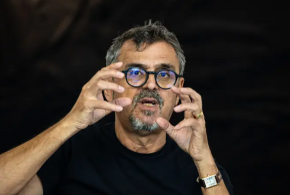
At DST, the guiding question when exploring new business opportunities is always: “Why not us?” For this reason, the group remains attentive to opportunities emerging across different sectors. For José Teixeira, low productivity is an issue that must be urgently addressed. The DST CEO also regrets how easily people give up.
Are you constantly exploring new opportunities and business areas? Is this constantly under analysis?
We have an innovation box that is used a lot because we actively encourage it. We award prizes for ideas that are approved, and when a project qualifies for SIFIDE (Tax Incentive System for Corporate R&D), we allocate 20% of the amount to the employee. There has to be an incentive; otherwise, employees might think, “Look, I’m coming up with ideas just to make this guy richer”, and that loses its appeal. They need to see that their ideas can also improve their own lives, by creating value, increasing salaries, and it has to be perceived that there is this tangible return. Beyond the innovation box, we also have a venture capital arm. We support start-ups and generate new ones internally. We have various spin-offs and are preparing another in the areas of security, cameras and artificial intelligence. Recently, we also launched a Building Information Model which is now a company within the group, based on an employee’s idea. In several of these companies, employees are shareholders.
Do you want a lot of ideas?
We need many ideas to arrive at a good one, because innovation is fundamentally a matter of quantity. It cannot be solved by a small office of highly qualified interesting graduates thinking in isolation. We want to bring back mass innovation. In a way, innovation has “taken to the streets”, to borrow an expression inspired by Zeca Afonso. Many ideas emerge; we assess and develop them, and there are always some that move forward. For example, we recently invested in Gazelle, a UK-based startup that developed a system capable of reducing the weight of offshore wind turbine platforms by 30%. The Portuguese government is about to launch a major tender for offshore wind energy capacity, and I reached an agreement to invest capital while also taking responsibility for construction, since we have a steel industry and so we have this new business.
How do you approach sustainability?
We always think in terms of a circular economy. For many years, we have said that sustainability is an opportunity, not a barrier to economic activity. Suddenly, through one of the mobilising agendas, NGS (New Generation Storage), focused on battery storage, we entered a field where we previously had no presence. Today, we operate what is perhaps the third-largest battery recycling plant in Europe, already in operation, extracting “black mass” from end-of-life batteries from cars and mobile phones, which we recycle. We invested €17 million in the plant and may invest up to a further €12 million in hydrometallurgy to do the same with lithium.
So sustainability creates multiple business opportunities...
Yes, there are no barriers if imagination is applied and everything can be something else. But if we remain in the status quo, with that “don’t touch my stuff” mentality, then business becomes far more complicated. We have several ongoing projects in this area. These include wind energy, batteries, and Zethaus, our industrial housing concept, which represents a paradigm shift that occurs every few decades. What we are doing here is manufacturing in a factory and then assembling on site. This has to do with ecological concerns, material control, quality control, and allows greater inclusion of women in the building industry. Women already represent 30% of our workforce in this area, and that share will grow. And then there is the important of beauty in design, helping to create that empathy and stating that we wish to act to transform something from on-site construction to factory-based production.
You are also building in Figueira da Foz…
We have begun constructing a large, beautiful factory in Figueira da Foz, designed by the architect Carvalho Araújo, covering 30 000 square metres for the prefabrication of concrete. We have also just acquired nearly double that area from a company that went bankrupt, and even before completing the factory, it is already operating at full capacity. We plan to integrate most of the workforce from that company into our operations, as it was a similar industry, involving tiles and ceramics. Demand is very strong. What’s needed is the determination to say “Let’s anticipate and produce what will be in demand’.
But is your focus always on investing around sustainability and providing solutions for the everyday problems of individuals?
The idea of ecology and the need to protect our shared home is particularly important to me. My primary interest, let us say, is social, although that naturally generates some utilitarian outcomes which of course lead to returns. But it is this broader purpose that gives me the greatest satisfaction in investing.
Are you focusing on environment related business?
Yes, business related to the environmental economy is very important to us, and we participate in many such projects. This battery recycling, in particular, will be a major opportunity. We have also entered the electric vehicle charging sector as operators. In telecommunications, we are working on a project to bring mobile 5G to inland regions of the country, using a beautiful tower we developed ourselves, as this also matters. Alongside this, we created a cultural programme linked to the initiative, involving a Mobile DST cultural unit, in partnership with Martim Sousa Tavares, with artists from poetry and theatre bringing cultural activities to rural regions. By adding this cultural dimension, we achieve greater engagement and connection with communities since this generates empathy with these locations.
Some say companies often operate in isolation and collaborate little. Do you encourage partnerships? Was that the case with your collaboration with Alstom in mobility and rail? Did you approach them?
We had had a previous experience collaborating with Alstom. Within these clusters, we work with over 50 partners from the scientific and technological system, as well as companies. The mobilising agendas created considerable initiatives and stated “companies have to join together in a cluster”, one here and one there in that area. We are heading two agendas and also participate in the communications agenda through DST Telecom, and everything is going well. Stronger links have been created between companies. In such a globalised world, no one can operate in isolation.
For a long time, investment focused on highways rather than rail. With the possibility of building trains in Portugal, some argued others could do it more cheaply. Does this ambition of doing this in Portugal suggest we could develop a train manufacturing industry for both domestic and export markets?
The tender was very well designed. It required companies to build a factory and produce a significant part of the trains in Portugal. In our case, this has involved expanding a large factory in Guifões, Matosinhos. Portugal has a strong tradition in rail maintenance, although there was a period when this was discontinued. The renewed investment plan came at the right time and followed the successful model of what had been undertaken some years ago for renewable energy, where tenders were opened for wind power. The tender determined there would be factories in Portugal which led to factories in Viana, and today Portugal produces wind turbines for the global market. That ecosystem was created and encouraged through that tender.
Does innovation also involve patents?
Patents are proof of our technical capability, and we are highly focused on them. We have to have patents. In industrial construction, we currently have 12 patents under evaluation. They are absolutely essential. We employ over 30 individuals with PhDs in the company. Combining science and technical training for workers with considerable technical competences and adding philosophy, literature, poetry and theatre is important to help engender this level of spiritual opening, of the spirit, and empowering employees. I want empowered employees, not obedient ones. I do not want a company that simply follows orders; I want one that says, “No, be patient, but I don’t think this is the right way.” There must be room for that freedom. That is how we provide situations which enable the economy to create real value and develop products capable of competing in global markets.
And in rail?
In rail, we have the opportunity to develop an aluminium carriage manufacturing industry. To do this, we are also building a large factory and establishing a hub in Condeixa for trains and workshops. We aim to provide services to CP, particularly when they open tenders for train maintenance and repair, as we wish to do this. Our proximity to Alstom clearly strengthens our position in this sector. Alongside this, I am considering launching a training programme for railway maintenance technicians, equipping students with skills for these emerging professions.
Are you also going to take part in a proposal to build part of the high-speed line [Oiã-Soure]?
Yes, we are bidding. We already bid for the first one, but we were not competitive enough on price; we were one billion euros short of matching the price.
So you are in the rail business to stay?
Absolutely, especially because we have our own trains in the company. We have considerable activity, we have many projects, and this will create opportunities in rail, but also in prefabricated concrete, with bridges and viaducts. And I very much like automation businesses, with artificial intelligence.
Are you investing in artificial intelligence?
We have bought several robots for our industry, and we have now bought 1000 ChatGPT Enterprise licences. That is €22 800 a month that I pay for one thousand licences because I believe it will make life easier for our workers. We have been working with artificial intelligence for eight years, and we want the number of hours needed to do things to go down, and the effort to go down too, especially the physical effort at work. And we have to invest in training so that many people learn how to work with this software.
At the end of January and the beginning of February we had extreme weather events we were not used to. What role can industrial construction play in such situations? Is it more or less safe in these conditions?
When we set up this project, from an engineering point of view we collaborated with a Portuguese company, with our engineering company and with Arup, a top British company that designed the Siza Vieira canopy and the tension cables for Braga Stadium. From an engineering standpoint, we wanted them to help us think about modular structures and connections. It is in the connections that we have patents. We already have patents for the connections between the module containers. And we have LNEC ensuring that everything is certified.
Does that make everything faster...
Certification is one of the major advantages industrial construction can bring, because I do not need a municipal council to assess my project if I already have certified parts. Check whether the building height is compliant, whether it fits urbanistically or not, because for everything else, the mechanical, electrical, calculations, acoustics, thermal performance, I have a certified product, and that is that. I am extremely optimistic. Industrial construction brings advantages with deadlines because while I am licensing, I am building. When the licence comes through, I assemble it.
And in relation to extreme events?
They are black swans. They are things that are not foreseen, but which we have to deal with somehow. Along with many other operators , we are currently connecting the last houses in the affected areas to the grid. We Portuguese are incredible when it comes to a helping and volunteering spirit. Then it fades away, that is life. The day after Storm Kristin, we had hundreds of roofs in Marinha Grande, Leiria, Figueiró dos Vinhos, Alcobaça and elsewhere. But not long ago I sent teams to Leiria and there were still many houses waiting to be connected to the electricity grid. The problem is that electricity goes as far as the little wall outside the house, but then EDP is not responsible for the inside, and that was damaged too. I tried to get people to let us in and I did that pro bono. It is one of those things they will one day do for me when I need it. But what collapsed were generally old, more fragile things, from other times. I built my factory in Figueira and not a single tile came off. Now we rebuild. And industrial construction has the capacity to respond. It allows everything to be done much more quickly. That is why we have also contacted the UN, and when you consider the tents they buy for demanding situations, this could also be an opportunity for the industrial construction sector. We would do it faster, and it would not be more expensive...
Are you talking about refugee camps?
For example. Refugee camps, which used to temporary, have now become permanent. There are people who are born, marry and die in refugee camps. When I look at wars and see our UN playing only an advisory role, with virtually no power at all... Clearly this war in the Middle East has created a problem we did not foresee, which is the closure of the Strait of Hormuz, with all that can mean for insurance prices, as well as oil and gas. Even so, the economy has a very great capacity for homeostasis. What will happen is that some companies will go bankrupt and others will appear; some jobs will disappear here and others will emerge. The economy then readjusts. Some products will become more expensive, with Portuguese people paying more for petrol and being told they will pay even more later, but all this will tend to balance out. What does not balance out is trust. How can all this be like this? You can go to a country and kidnap someone, or kill them, or say that now I am going to Cuba, now Greenland, now Iran, and soon the Azores? That is the serious problem, which is the question of trust, the world order.
Have you felt impacts from this conflict related to the supply of materials? And from prices?
Of course. We have price revision mechanisms in our projects. There are formulas for that. So it becomes more expensive, but we recover that through price revision. I would be dishonest if I said I am being harmed, because our price revision formulas consider the cost of diesel on the date I bid and the date I carry out the work. So there is an adjustment. Now, we thought the conflict in Ukraine would be swift, and it has not been swift, but there is once again a rebalancing of sources. It was said that without Russian gas Europe would not function, but it did function. And if suddenly people say, ‘why not next-generation nuclear power plants? Why not real investment in renewables, so that those without oil can have independence?’
Do you consider that we have a serious, almost permanent factor of geopolitical uncertainty weighing on the economy?
The international order, seen like this, with a more clinical eye, is frightening. Jorge Moreira da Silva, when undertaking his work at the UN, spoke of a world facing multiple crises because we do not have the Ukraine crisis, or the Iran crisis, or the Sudan crisis. We have nearly 50 regional crises and wars, which are very serious things. And there is a kind of fatigue even when it comes to compassion. Suddenly, the spotlight moved away from Venezuela, moved away from Ukraine a bit because it shifts with the news cycle and other places are forgotten. Human beings cannot remain in permanent stress from the news we receive. One crisis competes with the previous one. Poor Zelensky is struggling to keep the lights on, so that people do not forget him and Ukraine.
The problem is whether all these conflicts then end up being linked to one another?
When people talk about this new international order, they are talking about this new world in which Europe is, in fact, losing its significance. Compared with China, Russia and the United States, perhaps in Europe we were too nice... but is it bad to be nice? We have to have a defence industry. Mario Draghi came to talk about only three things, didn’t he? Security, sustainability and innovation. This is an absolutely extraordinary issue for our economy, and here at DST we are in open warfare, and we have even created a matrix, which is productivity. Productivity has technology, but it also has a social dimension. I can put in a robot, artificial intelligence, industrial engineering, but there is something here about reconciling freedom with discipline. People need discipline. Sometimes people do not feel like thinking because thinking is work, freedom is work, critical thinking is work, emancipation is work. And there is a capital sin here, which is apathy. This ‘leave me alone, I am fine as I am, do not bother me’ attitude is terrible. It is resignation. And there is something worse than resignation, which is moral neutrality. But exercising discipline in productivity means saying: ‘boys, while you are working, work like the devil. When you stop working, have a blast, enjoy life’.
You mentioned nuclear energy. Is that a business area in which you are interested?
I would love that. We made some parts here in our metalworking division for CERN that ended up one hundred and so metres underground, so we have already had a small hand in something meant to withstand catastrophes, very intense things. We need that initiative, that assertion, that emancipation, that sense of asking ‘why not?’ In the company I encourage that, in business I think like this: ‘but this is for them, so why isn’t it for me?’
So if an opportunity in nuclear energy comes along, will you move ahead?
I had never thought about that! But sometimes someone comes along with an idea and I say, ‘come on, let’s work on that, let’s think about it.’ I sometimes say the great problem of the economy is the lack of fiction.