- Engineering & Construction
- Environment
- Telecommunications
- Renewable energies
- Ventures
- Real estate
Respect. (from the lat. respectu) n. 1. respect; 2. consideration; high regard; 3. deference; compliance; veneration; 4. honour; worship; 5. relation; refererence...
We believe that everyone should be respected for their work, for their attitudes, opinions and options.
Rigor. (from the lat. rigore) n. 1. harshness; strength; 2.fig., severity; punctuality; accuracy.
There is no "more or less levelled", "more or less upright”, "more or less clean" or "more or less safe", but rather “levelled”, "upright”, "clean” and “safe". The rigour is reflected in our procedures, in time and in the rules to follow. In the light of moral and principles, being severe means being rigorous.
Passion. (from the lat. passione) n. 1. intense and usually violent feeling (affection, joy, hate, etc.) which hinders the exercise of impartial logic; 2. derived from a feeling; 3. great predilection; 4. partiality; 5. great grief; immense suffering...
Under the sign of passion – a text of the Portuguese poet Regina Guimarães – is our icon. Passion is to reveal great enthusiasm for something, favourable encouragement or opposite to something.
It is the sensibility transmitted by an architect or engineer through work.
Passion is the dedication to a project. Passion is a state of warm soul.
Loyalty. (from the lat. legalitate) n. the quality of being loyal; fidelity; sincerity.
Respect for the principles and rules that guide the honour and probity. Faithfulness to commitments and agreements undertaken, staunch character.
To remain loyal to the business partners because we depend on them and they depend on us.
Being trustworthy for being loyal.
Solidarity. (from the lat. solidare) n. 1. the quality of being solidary; 2. reciprocal responsibility among the members of a group, namely social, professional, etc.; 3. sense of sharing another’s suffering.
Being solidary is being a friend, offering our hand with genuine generosity and bringing joy and human warmth to those who, somehow, are marginalized. Being solidary is being more human. A solidary company is recognized as a fair and non-selfish company. A solidary company is a preferred choice in business. It is a more competitive company. Volunteering is a vehicle to solidarity. It is modern, fair, cultured, friend, it is a noble gesture of moral elevation.
Courage. (from the lat. coraticum) n. 1. bravery facing danger; intrepidity; to have audacity; 2. moral force before a suffering or setback; 3. [fig.] to input energy when performing a difficult task; perseverance...
Courage is essential in our life. Courage to face less pleasant situations when complex issues come up, not expecting random resolutions.
It is a value that we must highlight as opposed to the fearful, cowardly and laziness.
The courage to react to criticism not with an attitude of demotivation or sadness, but rather to search for the means and the action to overcome its own reason. This kind of courage, which is also an intellectual courage, is highly recommended.
Ambition. (from the lat. ambitione) n. 1. vehement desire of wealth, honours or glories; 2. expectation about the future; aspiration; 3. lust; greed…
Vehement desire to achieve a particular goal. Ambition not to resign ourselves. Ambition to take the best potential from ourselves. Ambition to deserve ourselves. Ambition to be athletes in our top-level competitive jobs. Ambition to beat our brands. Ambition to get the best deals with the maximum value, due to the high levels of proficiency and efficiency.
Esthetics. ESTHETICS (from the Greek aisthetiké, "sensitive") n.f. 1. Philosophy branch of philosophy that studies the beauty and nature of artistic phenomena; 2. author's own style, time, etc.; 3. harmony of shapes and colors, beauty; 4. set of techniques and treatments that aim to beautify the body.
We decided to build the company's economic foundations under a cultured, cosmopolitan and cool image. Because it is a charming state of being. Good taste because we are sustainable and we respect the planet. Good taste because we are sensitive. Good taste just because.
Responsibility. (from the lat respondere) n. the trait of being answerable to someone for something or being responsible for one's conduct; a form of trustworthiness.
We must be certain that, before a choice, we chose what is best for both of us and not just the best for each one. Each employee is responsible for his negotiated activity and co-responsible if the co-worker does not fulfil his own task, thus preventing the common goal. A team is a set of individuals - is a whole. In the business game, as in social or family contexts, everyone must comply with their own relative position and we shall not permit that one of ours fails to be in our team.
TSF
Speaking to TSF, the former president of Cáritas also suggested tax benefits to encourage large companies to help out
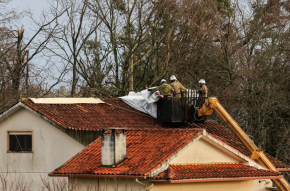
José Teixeira, the CEO of the DST Group, stated that the construction company was on the ground immediately after Storm Kristin hit and urged the state to launch a comprehensive “package” for the reconstruction of the affected areas.
“Launch open tenders for mass intervention, as, if you open a small tender or if you leave a rooftop repair to a resident’s discretion, where they would consult a company and that company takes time to provide a costing, then there will be safety issues, which needs oversight. And no large company will handle €5,000, €7,000, or €20,000 repair jobs. But bundle 1000 such repairs into a package and large companies will be encouraged to do so,” José Teixeira told TSF, in response to the open letter from arts and entertainment workers.
For the DST leader, this would mobilise “construction sites to handle repair jobs of €3,000, €20,000, €80,000 or €1.5 million.”
“This is easily managed through work typification. For, say, x square metres, x tiles, x battens, x metal supports, and so on. It’s the fastest way of doing this” he argued.
Asked if this process would take too long, José Teixeira disagreed: “Tenders must be fast tracked, and the Prime Minister has already stated that he is considering extending the deadline for certain public works, so that there can be a shift in resources, so we are on the right track. We just need a bit more patience. I know people are suffering and they are desperate, but there’s real momentum underway. My contribution is this: large-scale contracts with the sector is the best solution.”
The CEO of DST explained how the company has already contributed to helping people.
“In reality, energy and temporary roofing seemed priorities. So we deployed some water pumping stations to feed a community centre and to have a place where people could wash or shower, cook, charge mobile phones and so on. Later, we fitted hundreds of roofs in Figueiró dos Vinhos, and also in Alcobaça, Leiria, and Marinha Grande.” he declared.
The former president of Cáritas, Eugénio da Fonseca, also suggested to TSF that large companies could be incentivised to help via tax benefits.
“We are a solidarity-driven nation. If asked, because needs must be identified so that inefficient aid is not provided, I believe that a large number of companies, and I am going to focus in particular on those that are larger, that have greater investment possibilities, should co-operate in the emergency and rehabilitation phase, even if this were to be compensated for by tax benefits made available by the State. This has already happened in other situations. So mutual co-operation is essential here,” he recommended.
The former president of Cáritas emphasised the need to develop public policies that foresee these situations and enable faster responses.
“Portugal has long relied on, excuse the expression, a ‘make-do’ approach. We find it exceedingly difficult to plan and therefore to predict situations. We are now more alert, and there are fewer and fewer excuses for not creating emergency, contingency and prevention plans, even structural ones, to plan for these situations. Some unpredictability remains, but certain measures are essential. And what do these involve? Undoubtedly, through creating public policies that provide a framework for these situations and involve partners for on-the-ground action. We have to create the conditions for more immediate responses,” he argued.