- Engineering & Construction
- Environment
- Telecommunications
- Renewable energies
- Ventures
- Real estate
Respect. (from the lat. respectu) n. 1. respect; 2. consideration; high regard; 3. deference; compliance; veneration; 4. honour; worship; 5. relation; refererence...
We believe that everyone should be respected for their work, for their attitudes, opinions and options.
Rigor. (from the lat. rigore) n. 1. harshness; strength; 2.fig., severity; punctuality; accuracy.
There is no "more or less levelled", "more or less upright”, "more or less clean" or "more or less safe", but rather “levelled”, "upright”, "clean” and “safe". The rigour is reflected in our procedures, in time and in the rules to follow. In the light of moral and principles, being severe means being rigorous.
Passion. (from the lat. passione) n. 1. intense and usually violent feeling (affection, joy, hate, etc.) which hinders the exercise of impartial logic; 2. derived from a feeling; 3. great predilection; 4. partiality; 5. great grief; immense suffering...
Under the sign of passion – a text of the Portuguese poet Regina Guimarães – is our icon. Passion is to reveal great enthusiasm for something, favourable encouragement or opposite to something.
It is the sensibility transmitted by an architect or engineer through work.
Passion is the dedication to a project. Passion is a state of warm soul.
Loyalty. (from the lat. legalitate) n. the quality of being loyal; fidelity; sincerity.
Respect for the principles and rules that guide the honour and probity. Faithfulness to commitments and agreements undertaken, staunch character.
To remain loyal to the business partners because we depend on them and they depend on us.
Being trustworthy for being loyal.
Solidarity. (from the lat. solidare) n. 1. the quality of being solidary; 2. reciprocal responsibility among the members of a group, namely social, professional, etc.; 3. sense of sharing another’s suffering.
Being solidary is being a friend, offering our hand with genuine generosity and bringing joy and human warmth to those who, somehow, are marginalized. Being solidary is being more human. A solidary company is recognized as a fair and non-selfish company. A solidary company is a preferred choice in business. It is a more competitive company. Volunteering is a vehicle to solidarity. It is modern, fair, cultured, friend, it is a noble gesture of moral elevation.
Courage. (from the lat. coraticum) n. 1. bravery facing danger; intrepidity; to have audacity; 2. moral force before a suffering or setback; 3. [fig.] to input energy when performing a difficult task; perseverance...
Courage is essential in our life. Courage to face less pleasant situations when complex issues come up, not expecting random resolutions.
It is a value that we must highlight as opposed to the fearful, cowardly and laziness.
The courage to react to criticism not with an attitude of demotivation or sadness, but rather to search for the means and the action to overcome its own reason. This kind of courage, which is also an intellectual courage, is highly recommended.
Ambition. (from the lat. ambitione) n. 1. vehement desire of wealth, honours or glories; 2. expectation about the future; aspiration; 3. lust; greed…
Vehement desire to achieve a particular goal. Ambition not to resign ourselves. Ambition to take the best potential from ourselves. Ambition to deserve ourselves. Ambition to be athletes in our top-level competitive jobs. Ambition to beat our brands. Ambition to get the best deals with the maximum value, due to the high levels of proficiency and efficiency.
Esthetics. ESTHETICS (from the Greek aisthetiké, "sensitive") n.f. 1. Philosophy branch of philosophy that studies the beauty and nature of artistic phenomena; 2. author's own style, time, etc.; 3. harmony of shapes and colors, beauty; 4. set of techniques and treatments that aim to beautify the body.
We decided to build the company's economic foundations under a cultured, cosmopolitan and cool image. Because it is a charming state of being. Good taste because we are sustainable and we respect the planet. Good taste because we are sensitive. Good taste just because.
Responsibility. (from the lat respondere) n. the trait of being answerable to someone for something or being responsible for one's conduct; a form of trustworthiness.
We must be certain that, before a choice, we chose what is best for both of us and not just the best for each one. Each employee is responsible for his negotiated activity and co-responsible if the co-worker does not fulfil his own task, thus preventing the common goal. A team is a set of individuals - is a whole. In the business game, as in social or family contexts, everyone must comply with their own relative position and we shall not permit that one of ours fails to be in our team.
País positivo
The construction sector has historically centred its activity within a construction site, where operations rely on practices relating to the incorporation and mixing of materials, components and construction systems.
While technological development and innovation in certain products have been observed, rudimentary and inefficient processes still remain, supported by scarce, underqualified labour, making the sector less innovative and resistant to change. In fact, despite innovation in components and products, this mixing is still carried out project by project, in a poorly optimised way, without ongoing inclusive improvement, where such works are developed on the basis of designs that are often lacking in detail, and where the quality of their execution depends on the competence and experience of the teams. These challenges are aggravated by a growing shortage of skilled labour, the rapid disappearance of traditional “master craftspeople”, and an environment that is not attractive to younger generations.
Against this backdrop, the need for a structured and systemic response becomes unavoidable. Efficient processes must be enabled and put into practice as an answer to this. And this need is not new, but in the current context it has acquired new urgency. The scale of the challenge becomes clearer when viewed by analogy with other, more mature industrial sectors. Extending this context to the automotive industry would mean having the same product made in different production units, with different components, different manufacturing processes, different execution times and different levels of quality, as a result of team discretion, their know-how, a “this is how we have always done it” approach, supply-chain variability and the arbitrary availability of all these actors.
Industrialising construction means rationally maximising operationality within a factory environment, supported by efficient and optimised construction systems, making the industrial unit the centre of production, innovation, continuous improvement, procedural standardisation, along with the anticipation and stabilisation of supply chains. These industrial and technological hubs will be able to serve as reference points to attract qualified, multidisciplinary professionals, with interdisciplinary skills, within a working environment that is safer, more collaborative, efficient and innovative, with integrated industrial thinking. Naturally, there are important specific features in the final product created in the construction sector — the building — when compared with other industries such as automotive manufacturing. These important specific features, their urban fit, functionality, flexibility and architectural freedom, must be considered when transferring this work from a site to a factory, but they cannot and should not be an obstacle to a paradigm shift that will necessarily revolutionise the way companies think and organise themselves. These changes require the creation of construction systems and investment in industrial processes that promote this mixture of different materials, products and technologies into processes of operational excellence, supported by reliable and robust supply chains, within a cooperative environment based on permanent innovation. Academia and vocational schools have a fundamental role in defining curricula specifically developed for this new industrial thinking. These programmes should be designed and taught in close connection with companies, and will make it possible to train new professionals with interdisciplinary skills, creating conditions for new professions within the sector. As part of this structural transformation of the industrial fabric, it is also necessary to ensure that the regulatory framework keeps pace with this evolution. Legislators, licensing bodies, certification authorities and professional associations therefore have an essential role in producing and adapting legislation that supports this new industrialisation, fostering mandatory characterisation and certification of systems and products, as well as requiring certified quality control systems related to such processes. Industrialising construction is a powerful tool to respond to the current challenges of housing in cities. When approached strategically, it can help reduce costs, speed up processes, reduce environmental impacts and ensure greater quality control, while also allowing customisation and adaptability.
Its adoption will engender a profound transformation of the sector. More than an opportunity, it is an inevitable transformation to ensure the sector’s future sustainability, efficiency and competitiveness.
Academic institutions and vocational schools play a fundamental role in shaping curricula specifically designed for this new industrial mindset. These programmes should be developed and delivered in close collaboration with companies, enabling the training of new professionals with interdisciplinary skills.
The industrialisation of construction is a powerful tool for addressing present-day housing challenges in cities. When approached strategically, it can help reduce costs, speed up processes and reduce environmental impact.
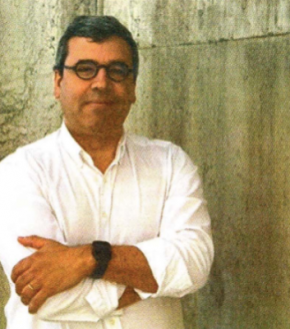
Nuno Neves, Executive Board Member | Bysteel, dst group