- Engineering & Construction
- Environment
- Telecommunications
- Renewable energies
- Ventures
- Real estate
Respect. (from the lat. respectu) n. 1. respect; 2. consideration; high regard; 3. deference; compliance; veneration; 4. honour; worship; 5. relation; refererence...
We believe that everyone should be respected for their work, for their attitudes, opinions and options.
Rigor. (from the lat. rigore) n. 1. harshness; strength; 2.fig., severity; punctuality; accuracy.
There is no "more or less levelled", "more or less upright”, "more or less clean" or "more or less safe", but rather “levelled”, "upright”, "clean” and “safe". The rigour is reflected in our procedures, in time and in the rules to follow. In the light of moral and principles, being severe means being rigorous.
Passion. (from the lat. passione) n. 1. intense and usually violent feeling (affection, joy, hate, etc.) which hinders the exercise of impartial logic; 2. derived from a feeling; 3. great predilection; 4. partiality; 5. great grief; immense suffering...
Under the sign of passion – a text of the Portuguese poet Regina Guimarães – is our icon. Passion is to reveal great enthusiasm for something, favourable encouragement or opposite to something.
It is the sensibility transmitted by an architect or engineer through work.
Passion is the dedication to a project. Passion is a state of warm soul.
Loyalty. (from the lat. legalitate) n. the quality of being loyal; fidelity; sincerity.
Respect for the principles and rules that guide the honour and probity. Faithfulness to commitments and agreements undertaken, staunch character.
To remain loyal to the business partners because we depend on them and they depend on us.
Being trustworthy for being loyal.
Solidarity. (from the lat. solidare) n. 1. the quality of being solidary; 2. reciprocal responsibility among the members of a group, namely social, professional, etc.; 3. sense of sharing another’s suffering.
Being solidary is being a friend, offering our hand with genuine generosity and bringing joy and human warmth to those who, somehow, are marginalized. Being solidary is being more human. A solidary company is recognized as a fair and non-selfish company. A solidary company is a preferred choice in business. It is a more competitive company. Volunteering is a vehicle to solidarity. It is modern, fair, cultured, friend, it is a noble gesture of moral elevation.
Courage. (from the lat. coraticum) n. 1. bravery facing danger; intrepidity; to have audacity; 2. moral force before a suffering or setback; 3. [fig.] to input energy when performing a difficult task; perseverance...
Courage is essential in our life. Courage to face less pleasant situations when complex issues come up, not expecting random resolutions.
It is a value that we must highlight as opposed to the fearful, cowardly and laziness.
The courage to react to criticism not with an attitude of demotivation or sadness, but rather to search for the means and the action to overcome its own reason. This kind of courage, which is also an intellectual courage, is highly recommended.
Ambition. (from the lat. ambitione) n. 1. vehement desire of wealth, honours or glories; 2. expectation about the future; aspiration; 3. lust; greed…
Vehement desire to achieve a particular goal. Ambition not to resign ourselves. Ambition to take the best potential from ourselves. Ambition to deserve ourselves. Ambition to be athletes in our top-level competitive jobs. Ambition to beat our brands. Ambition to get the best deals with the maximum value, due to the high levels of proficiency and efficiency.
Esthetics. ESTHETICS (from the Greek aisthetiké, "sensitive") n.f. 1. Philosophy branch of philosophy that studies the beauty and nature of artistic phenomena; 2. author's own style, time, etc.; 3. harmony of shapes and colors, beauty; 4. set of techniques and treatments that aim to beautify the body.
We decided to build the company's economic foundations under a cultured, cosmopolitan and cool image. Because it is a charming state of being. Good taste because we are sustainable and we respect the planet. Good taste because we are sensitive. Good taste just because.
Responsibility. (from the lat respondere) n. the trait of being answerable to someone for something or being responsible for one's conduct; a form of trustworthiness.
We must be certain that, before a choice, we chose what is best for both of us and not just the best for each one. Each employee is responsible for his negotiated activity and co-responsible if the co-worker does not fulfil his own task, thus preventing the common goal. A team is a set of individuals - is a whole. In the business game, as in social or family contexts, everyone must comply with their own relative position and we shall not permit that one of ours fails to be in our team.
EL PAÍS
The Portuguese builder and patron of the arts, who worked cutting stone as a child, has opened MUZEU in Braga, a centre for reflecting on and trying to transform the world.
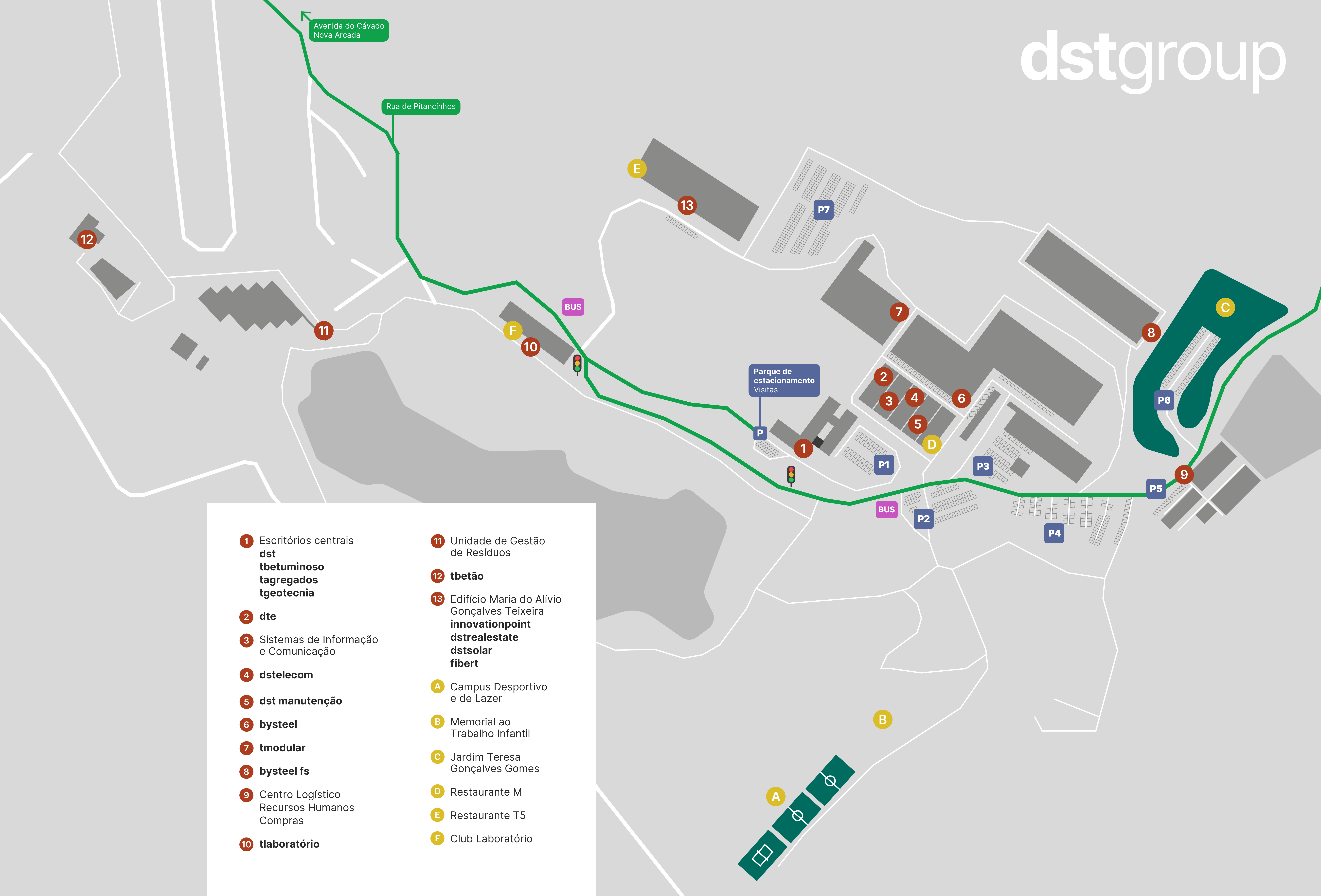
In the Palmeira industrial park, on the outskirts of the Portuguese city of Braga, workers and managers devote one hour of their working day to reading and receive free classes in philosophy, painting or theatre. Culture is an integral part of the working day across these 80 hectares of factories, offices and heavy machinery, headquarters of construction giant DST, with around 50 companies and 4,000 employees. Workers carry out their tasks surrounded by 40,000 books, works of art wherever they look and literary quotations that catch their attention from large letters on walls.
Palmeira embodies the dream of José Teixeira (Braga, 1960), a rich man who was born poor and who, as he tells it, was saved by culture as a child. He owns only one house and one car, people in his circle say, and much of the fortune he accumulated with his construction group was invested in an art collection containing 1,500 works.
In April, Teixeira opened Muzeu, a centre for thought and contemporary art, the first in his home city, with 212,000 inhabitants. It presents a selection of around one hundred works by artists such as Alex Katz, Artur Lescher, Candida Höfer, Ansel Kiefer, Isabel Muñoz, José Pedro Croft, Nan Goldin, Pedro Cabrita Reis and Picasso, but it is not intended to be merely a repository of paintings, photographs and sculptures. 'I don't want a neutral museum; Muzeu wants to provoke,' warns its founder, who allocated €40 million to the project. The idea of naming it a centre for thought came from its director, Helena Mendes Pereira. 'It is a museum to intervene in the polis, to educate, to mobilise,' she explains. 'I have worked with many collections, I know the market and I can say that Teixeira is a distinctive personality. In addition to being a patron, collector and owner of the ZET gallery, with premises in Braga and Lisbon, he has countless projects that he invents himself. What motivates him is changing things, and he understood that the power money gives you is to do what you want.'
That is why, Mendes points out, Muzeu invests heavily in a diverse and constantly evolving programme, which even includes philosophy sessions for children. 'Learning to ask questions is essential,' argues the DST president.
Last week, the installation 'Handle with Care' by Lebanon-born Canadian-based artist Elias Nafaa was inaugurated at Muzeu, and EL PAÍS was invited to visit along with other media outlets. The work reproduces the different types of bombs used by Israel in its repeated attacks on Lebanon since 2023. To create it, the artist delved into war archives. 'Like many people in exile, I live in a constant void: physical distance does not protect me from the emotional weight, nor from the feeling of helplessness,' says Nafaa.
Teixeira's utopia emerged in a quarry in the 1960s, with Portugal plunged into the economic and cultural poverty of dictatorship. At just seven years old, he worked breaking stone. There was not even a book at home, he recalls. His first reading came thanks to a charity foundation that distributed copies in the street. Those pages opened a door of escape for young Teixeira. 'The poor boy became the hero he chose in the book he was reading,' he recalls.
The liberation and comfort that reading gave young Teixeira grew when he began doing theatre with the scouts, as the years passed and his family left poverty behind, building the construction company he now runs. 'I realised that art is fundamental, that it was very good for me. And I thought that, if it worked for me, it had to work with others,' he explains. That biography is now present in the Palmeira industrial park, where artist José Pedro Croft has created a memorial against the child labour Teixeira himself experienced.
'Proximity to culture is productive'
Among the factories, an art installation equipped with a megaphone broadcasts emancipatory speeches in Nelson Mandela's voice. DST headquarters is an open-air museum, with more works by women than men. It has a sound and photography studio and workshops to host resident artists who will soon live in homes still under construction, designed by Norman Foster.
From time to time, the industrial park welcomes creators looking for industrial waste to transform into works of art. The women's changing rooms recreate the dressing rooms of a theatre.
DST argues that 'proximity to culture is productive' and that it is possible to 'work with high standards and grow as a person' while still fulfilling working hours.
'I make a lot of money because I have the workers on my side,' says its president, shrugging when asked why his fellow entrepreneurs do not replicate his model. 'Companies have duties to the community beyond paying taxes; they have a social, moral and ethical contract,' he argues. He says he is not afraid of critical subordinates challenging him, nor that his advocacy of labour rights will irritate fellow businesspeople or politicians who award contracts.
Just a few days ago, a company party was held at DST.
One of the workers approached Teixeira to tell him something. He confessed that he had been in prison and had attended one of Teixeira's conferences there. Listening to him, the now-employee assured Teixeira, had 'changed his life'. The builder recounts how much this impressed him, stroking the hairs standing up on his arms. 'Beautiful things work better,' he proclaims.