- Engineering & Construction
- Environment
- Telecommunications
- Renewable energies
- Ventures
- Real estate
Respect. (from the lat. respectu) n. 1. respect; 2. consideration; high regard; 3. deference; compliance; veneration; 4. honour; worship; 5. relation; refererence...
We believe that everyone should be respected for their work, for their attitudes, opinions and options.
Rigor. (from the lat. rigore) n. 1. harshness; strength; 2.fig., severity; punctuality; accuracy.
There is no "more or less levelled", "more or less upright”, "more or less clean" or "more or less safe", but rather “levelled”, "upright”, "clean” and “safe". The rigour is reflected in our procedures, in time and in the rules to follow. In the light of moral and principles, being severe means being rigorous.
Passion. (from the lat. passione) n. 1. intense and usually violent feeling (affection, joy, hate, etc.) which hinders the exercise of impartial logic; 2. derived from a feeling; 3. great predilection; 4. partiality; 5. great grief; immense suffering...
Under the sign of passion – a text of the Portuguese poet Regina Guimarães – is our icon. Passion is to reveal great enthusiasm for something, favourable encouragement or opposite to something.
It is the sensibility transmitted by an architect or engineer through work.
Passion is the dedication to a project. Passion is a state of warm soul.
Loyalty. (from the lat. legalitate) n. the quality of being loyal; fidelity; sincerity.
Respect for the principles and rules that guide the honour and probity. Faithfulness to commitments and agreements undertaken, staunch character.
To remain loyal to the business partners because we depend on them and they depend on us.
Being trustworthy for being loyal.
Solidarity. (from the lat. solidare) n. 1. the quality of being solidary; 2. reciprocal responsibility among the members of a group, namely social, professional, etc.; 3. sense of sharing another’s suffering.
Being solidary is being a friend, offering our hand with genuine generosity and bringing joy and human warmth to those who, somehow, are marginalized. Being solidary is being more human. A solidary company is recognized as a fair and non-selfish company. A solidary company is a preferred choice in business. It is a more competitive company. Volunteering is a vehicle to solidarity. It is modern, fair, cultured, friend, it is a noble gesture of moral elevation.
Courage. (from the lat. coraticum) n. 1. bravery facing danger; intrepidity; to have audacity; 2. moral force before a suffering or setback; 3. [fig.] to input energy when performing a difficult task; perseverance...
Courage is essential in our life. Courage to face less pleasant situations when complex issues come up, not expecting random resolutions.
It is a value that we must highlight as opposed to the fearful, cowardly and laziness.
The courage to react to criticism not with an attitude of demotivation or sadness, but rather to search for the means and the action to overcome its own reason. This kind of courage, which is also an intellectual courage, is highly recommended.
Ambition. (from the lat. ambitione) n. 1. vehement desire of wealth, honours or glories; 2. expectation about the future; aspiration; 3. lust; greed…
Vehement desire to achieve a particular goal. Ambition not to resign ourselves. Ambition to take the best potential from ourselves. Ambition to deserve ourselves. Ambition to be athletes in our top-level competitive jobs. Ambition to beat our brands. Ambition to get the best deals with the maximum value, due to the high levels of proficiency and efficiency.
Esthetics. ESTHETICS (from the Greek aisthetiké, "sensitive") n.f. 1. Philosophy branch of philosophy that studies the beauty and nature of artistic phenomena; 2. author's own style, time, etc.; 3. harmony of shapes and colors, beauty; 4. set of techniques and treatments that aim to beautify the body.
We decided to build the company's economic foundations under a cultured, cosmopolitan and cool image. Because it is a charming state of being. Good taste because we are sustainable and we respect the planet. Good taste because we are sensitive. Good taste just because.
Responsibility. (from the lat respondere) n. the trait of being answerable to someone for something or being responsible for one's conduct; a form of trustworthiness.
We must be certain that, before a choice, we chose what is best for both of us and not just the best for each one. Each employee is responsible for his negotiated activity and co-responsible if the co-worker does not fulfil his own task, thus preventing the common goal. A team is a set of individuals - is a whole. In the business game, as in social or family contexts, everyone must comply with their own relative position and we shall not permit that one of ours fails to be in our team.

Boas Práticas
Can People Management be a philosophy of life based on humanism, culture and well-being? In the dstgroup, yes. For Human Resources Director José Machado, these concepts are now as strategic as innovation or productivity.
By Tânia Reis
As Fernando Pessoa once said, “culture is not about reading a lot, or knowing a lot; it is about knowing deeply.” That is precisely what the dst group, the Portuguese engineering and construction group, sees as its ethos, reflected in its brand signature, “building culture”. It applies this with a keen sense of mission towards its 3566 employees, the Braga community where it is based, and society in general, both in Portugal and abroad.
“In the areas where we operate, People Management is the heart of our focus and plays an increasingly strategic role, especially in a context marked by rapid changes and growing demands, both technically and humanistically”, José Machado, the director of Human Resources, emphases from the outset. To counter the shortage of skilled labour and turnover in the sector, “which undermines the continuity of knowledge, increases recruitment and training costs, and affects productivity”, the group has invested in a broad set of policies and practices, in a “constant balance between productivity, safety, quality, knowledge and the well-being of our teams”.
In a sector defined by high pressure and demanding work, “investing proportionally in human development, technical and humanistic training” is essential to ensuring long-term sustainable results, competitiveness and differentiation. The strategy is based on the slogan “feeling good doing good”, which “means that doing good benefits not only those who receive those efforts, but also those carrying them out”, the Human Resources director explains. “There is reciprocity, because on the one hand this improves other people’s lives and, on the other, it generates positive effects in those who practise these actions, increasing purpose and emotional well-being.” This idea has a double impact, he adds, “on others and on ourselves”. In essence, it is an invitation to act with generosity. Within the dstgroup, “that matters, a lot,” he assures us.
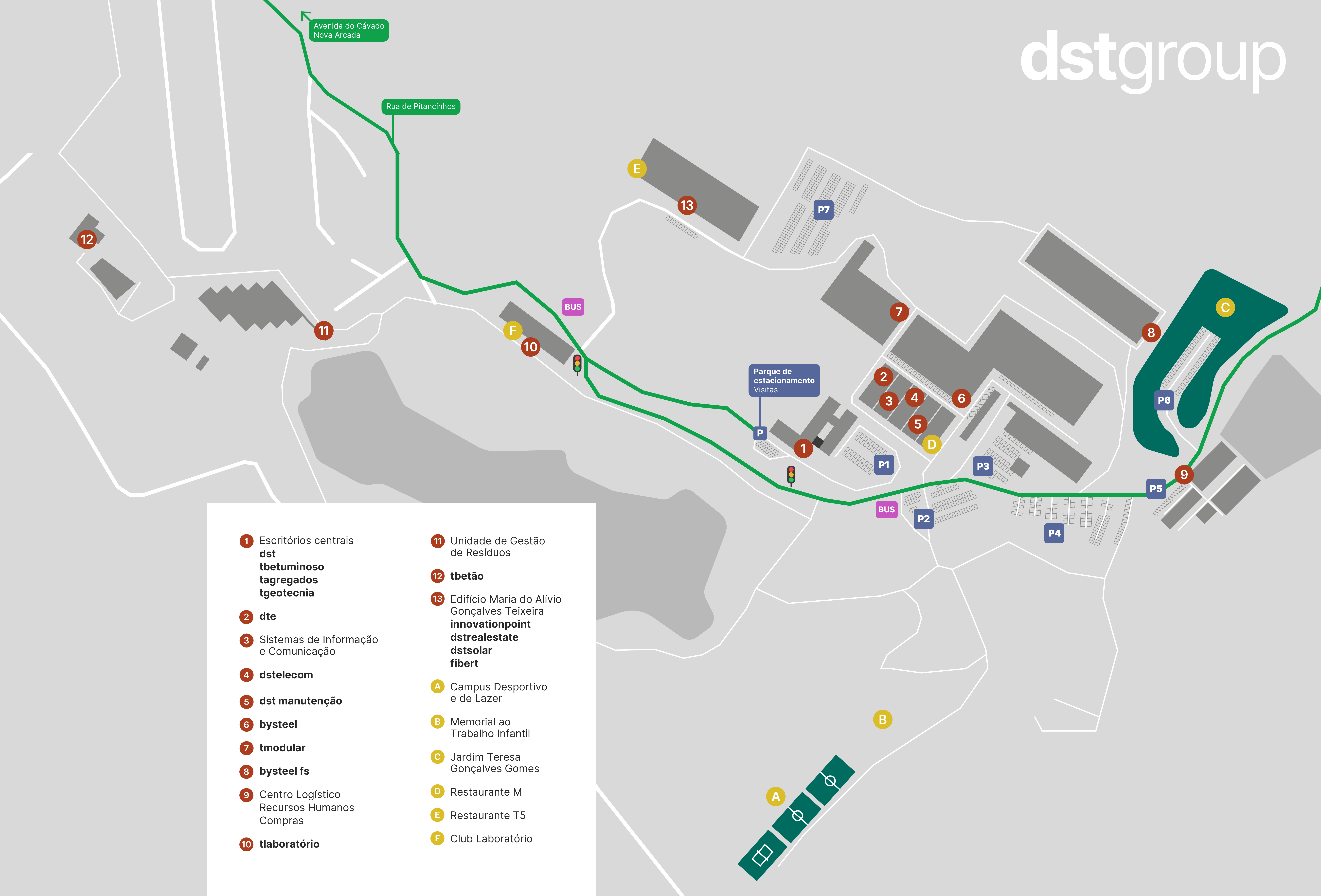
For those who work in the group, benefits include a health centre offering general medicine, curative care, dentistry, psychology, nursing and physiotherapy, as well as aesthetic medicine and rejuvenation consultations. There is also a sports campus, holiday camps and ballet classes for the employees’ children, manicure and hairdressing services, a community laundry and, since 2024, the campus in Braga has also been made available for employees’ weddings. “We made the dreams of two employees come true. This year it will be the third, with everything paid for: catering, entertainment and decoration”, he mentions.
In the area of well-being, training is also provided in “Mental Health First Aid”. “Awakening our awareness of the ‘inner self’ and of the signs that we often try to hide or even ignore is the first step towards self-knowledge”, states José Machado, stressing the importance of looking around and recognising indicators that may trigger warning signs.
Culture that connects
On a more “cultural” level, employees have access to painting classes, reading parties, a corporate band, an arcade games room, a theatre and even an internal nightclub. “Empathy goes out into the street, is exposed and put to the test”, he says. “These initiatives are like social laboratories involving sharing, conviviality and well-being. We all gain!”
Externally, as a cultural patron, the group promotes “Poetic Consultations” in partnership with the Paisagem Periférica Association and with the support of the Braga Branch of the Portuguese Red Cross. “It is an initiative born of the ongoing ambition to democratise access to the arts, reading, poetry, and the world of creativity and the imagination. Each conversation, lasting between 20 and 25 minutes, always begins with the question ‘How are you?’ and takes place between an artist and a ‘patient-spectator’, who receives a poetic prescription at the end of the meeting.
José Machado shares that, “in 2024, dozens of homeless people took part in the ‘Poetic Consultations’, describing them as a rare experience of being heard, valued and feeling present”. The proven success of the initiative led to its repetition last year and an expansion of its scope. Aware of the impact that an apparently simple action can have in the daily lives of people living in greater isolation, the group also brought these consultations to the Guimarães Prison Establishment, “an equally remarkable session”, he underlines. This year, the second edition of the “Poetic Consultations” at that prison took place on World Theatre Day, 27 March.
“Reading in nurseries, care homes, hospitals and prisons” is another example. “The initiative arose from the desire to broaden the reach of cultural action and bring literature closer to publics who are often somewhat removed from traditional cultural circuits”, José Machado notes. As with the “Poetic Consultations”, the impact was incredibly positive. “In spaces such as hospitals, senior citizens’ homes or prisons, this moment of reading created spaces for pause, listening and reflection”, he indicates. “We felt that literature worked as a form of emotional comfort, helping to ease harder routines, isolation and even anxiety.” The Human Resources Director also highlights other significant cultural initiatives, such as the national “dst Grand Prize for Literature”, which has been running for 30 years, and, since 2019, extended to Angola in partnership with the Camões Institute, giving rise to the dstangola/Camões Literature Prize; as well as support for the Braga Theatre Company, for more than 40 years, and the Comédias do Minho Theatre Company. Indeed, this April Muzeu – the DST Museum of Thought and Contemporary Art will open.
For José Machado, the impact of this strategy on employee engagement is clear. “All investment in emotional salary, training and well-being generates positive perceptions, through the appreciation we receive from our workers. Commitment, a sense of mission and employees’ trust in the company are strengthened”, he argues.
From technical to critical thinking
Continuous growth and learning for its individuals are also not neglected, and they take shape in the dst school and the dst industrial school. It is there that the workers of the future are transformed, he emphasizes. “Critical thinking, autonomy and reflection call for “intellectual liberation”, making us active, free citizens and a kind of social activists”.
The Annual Training Plan is built from a survey of needs identified by employees, alongside the annual performance review. “One process supports the other and both reinforce each other, so that we can identify the annual strategic macro-guidelines for training in the dst group”. The plan focuses on hard skills and soft skills, with particular emphasis on humanistic areas.
In the case of the dst school, located in Palmeira, it “stems from a strategic vision that goes beyond strictly functional training, with the aim being the overall development of workers”. Within this context, it promotes a humanistic training approach, where technical knowledge is complemented by cultural, artistic and critical thinking dimensions.
In addition to cultural and training initiatives, namely in theatre, philosophy, painting and cinema, the dst school provides access to a broad range of technical and professional training opportunities, tailored to the distinct roles and business areas of the group.
“These include specialised vocational training, as well as programmes developed in partnership with various higher educational institutions, promoting ongoing improvement and lifelong skills development,” José Machado explains.
For leadership roles, he recognises that executive training in Communication and Leadership with UMinhoExec or the general Management course with Porto Business School are examples of strategic and differentiating initiatives. “We value very practical and personalised approaches, with the participation of specialists who align their knowledge with the real needs of leadership”. Analysing day-to-day practical cases is intended to increase awareness and understanding of the skills acquired, while modules such as “theatre in operations management” promote interpersonal, humanistic and leadership skills.
Beyond the strengthening of advanced technical skills, particularly in Engineering, Industrial Construction, Management, Innovation, Digitalisation and Sustainability, there is also a strong focus on developing critical and analytical thinking skills, as shown by the Philosophy course attended by more than 500 workers.
The aim is to “consolidate strategic management skills, humanistic leadership and team management, promoting leaders capable of matching results with people’s development, in alignment with the organisational culture”. Indeed, the dst group promoted the first PhD in Portugal in the field of Industrial Construction, involving a fully funded employee who defended her thesis in January this year.
Empathy at the centre of leadership
If any doubt remained, recognition and attractiveness are reflected in the number of non-specific applications, which “explode” whenever a new benefit or project is announced, says the People Director. “Of course, the areas with the greatest labour shortages remain critical, but that is not related to us, but to the reality of the labour market”.
Speaking about the most valued skills, “empathetic management is at the top of the agenda”, he confirms, particularly understanding the complexity of emotions, different perspectives and the needs of others. “When we are able to ‘put ourselves in the other person’s shoes’, we can adjust expectations, respect and support each person’s development.” And he warns that if this issue is underestimated, low productivity may be the expected result.
For that reason, José Machado believes that the Human Resources department is increasingly acting as the sponsor of active-listening processes for workers. “It will be inevitable that relevant, sustainable, human and future-oriented organisations will be companies that listen more, that seek what is not said and look for what we have not yet seen.”
For this reason, the group promotes coherent active-listening processes that create a genuine two-way communication channel. Listening thus becomes a strategic practice, and “it is important to recognise that this implies commitment”, meaning active listening only creates value when it is linked to subsequent action. “Of course not all suggestions are implemented, but it is essential to provide feedback, explain decisions and maintain transparency throughout the process.”
Looking to the future, he concludes that the next major Human Resources challenges are, firstly, to equip leaders with stronger humanistic skills, so that “new management models based on psychological well-being can coexist with productivity, rigour and competence”; secondly, to align workers’ expectations with the need to integrate emotional intelligence and automation into processes, with upskilling and reskilling at the top of the agenda, along with a communication plan linked to the most significant issues.